HIMaR Research Areas

Accomplish your career-focused goals with a flexible, online advanced degree geared for working professionals.

Our Latest Case Studies

Advanced Nanomaterials for Energy Conversion and Storage

HIMaR researchers develop the next generation of nanostructured materials that power clean energy technologies — from solar cells to hydrogen storage. The work combines synthesis, modeling, and characterization of complex material systems such as borides, nitrides, and chalcogenide perovskites. By studying how nanoscale doping, strain, and structure affect energy conversion and catalytic performance, this research enables durable, efficient, and sustainable energy solutions for island and remote communities. Collaborative efforts with the University of Washington and national labs bring cutting-edge tools — including high-pressure X-ray diffraction, in-situ spectroscopy, and AI-assisted modeling — to reveal fundamental mechanisms that drive material performance.
Sustainable Materials for Island Communities

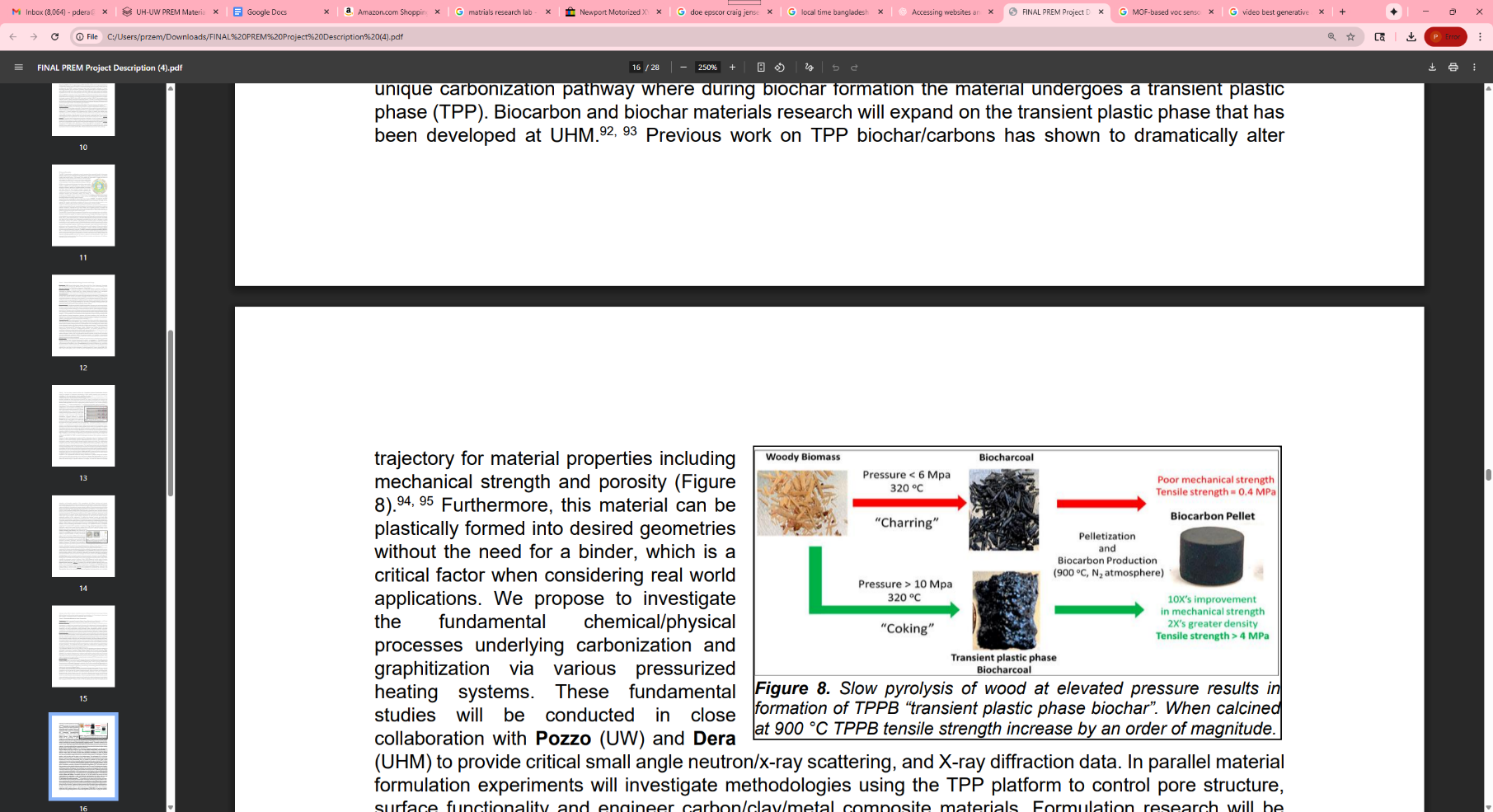
This research area focuses on designing materials that address the unique sustainability challenges of Hawaiʻi and other island environments. HIMaR teams are creating bio-derived composites, ionic-liquid clays, and hybrid materials that enhance soil fertility, prevent coastal erosion, purify water, and upcycle waste plastics. By combining natural resources like clay minerals, biopolymers, and biomass with advanced synthesis and characterization methods, these projects transform local materials into high-value, environmentally responsible products. The work connects laboratory discovery to field applications — developing erosion barriers, water filters, and gas sorbents that contribute to Hawaiʻi’s resilience, circular economy, and community well-being.

AI-Driven Materials Acceleration and Automation

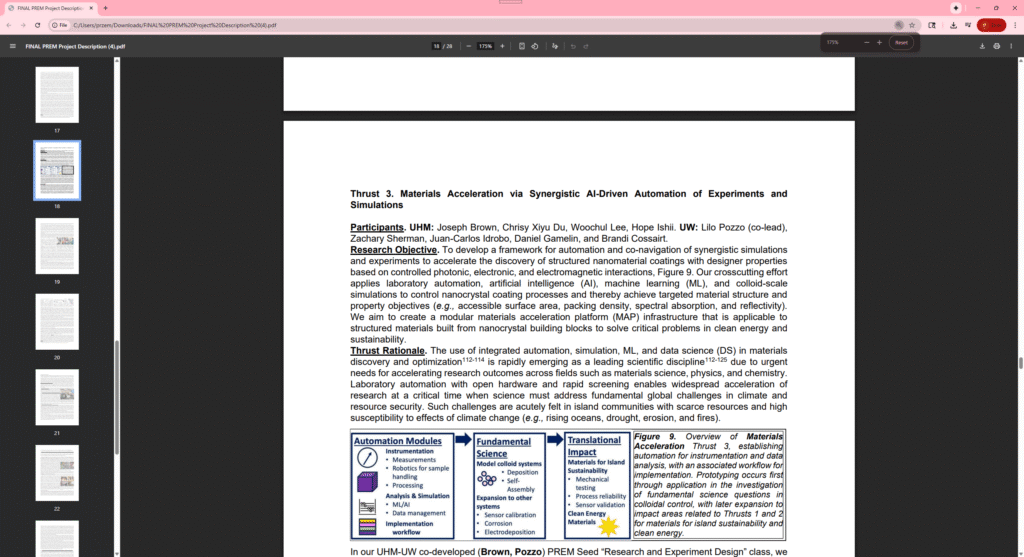
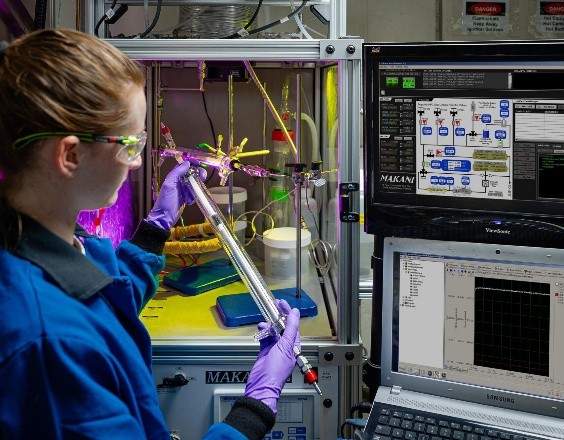
HIMaR is building the future of digital materials discovery through Materials Acceleration Platforms (MAPs) that integrate robotics, machine learning, and simulation. Researchers are automating experimental workflows to rapidly design and optimize materials for clean energy and environmental sustainability. This work blends laboratory automation with  artificial intelligence to enable inverse design of nanomaterials — predicting and achieving targeted optical, electronic, or catalytic properties. The approach transforms how scientists explore complex materials systems, creating faster, data-rich pathways for discovery while training students in next-generation AI-enabled laboratory methods.

Environmental and Biomedical Sensor Materials and Devices

HIMaR develops advanced sensor materials and devices for real-time environmental and biomedical monitoring. This work focuses on organic and flexible piezoelectric materials that convert mechanical energy into electrical signals, enabling next-generation self-powered sensors. These materials are designed for applications such as seismic and underwater monitoring, autonomous systems, and wearable health devices that can withstand dynamic and harsh environments. By exploring new families of synthetic organic single-crystal piezoelectrics, HIMaR scientists aim to create durable, lightweight, and flexible devices for both environmental sensing and defense applications. The research blends materials synthesis, X-ray and AFM characterization, and additive manufacturing of microscale devices, positioning Hawaiʻi as a hub for innovative sensor technology for ocean, air, and biomedical applications.

Electrochemical Catalysts for Environmental Mediation

HIMaR researchers are pioneering electrocatalytic systems that convert CO₂ into valuable fuels and chemicals, addressing global environmental and energy challenges. This research combines atomically precise metal nanoclusters (such as Au–Cu nanoparticles) with additive manufacturing of advanced porous electrodes. These electrocatalysts drive selective CO₂ reduction to C₂ products such as ethanol and acetic acid, offering efficient pathways toward carbon recycling and clean energy production. The team integrates computational modeling, in situ NMR spectroscopy, and electrochemical testing to understand the fundamental mechanisms of catalysis. Beyond environmental remediation, this work establishes the foundation for sustainable energy storage, fuel cells, and electronic devices relevant to both defense and civilian applications.

Printable Contaminant Mitigation Materials

This research thrust develops 3D-printable sorbents and filter materials for gas, water, and soil decontamination. HIMaR scientists are advancing ionic liquid- and MOF-based sorbents that can be additively manufactured into high-performance, reversible filter media. By leveraging advanced printing and computational design, these materials can be engineered for specific applications such as CO₂, SO₂, and NH₃ capture, acid gas removal, and water purification. The work explores nano-confined ionic liquids, which offer high selectivity and tunability, and porous metal–organic frameworks (MOFs) optimized through lattice engineering for rapid contaminant adsorption. This area directly supports the Navy’s sustainability and readiness goals, providing scalable, reusable solutions for pollution control and energy-efficient environmental protection technologies.

Materials System Integration and Automation

HIMaR’s automation and integration research builds the foundation for Materials Acceleration Platforms (MAPs)—digitally connected laboratories where fabrication, testing, and modeling occur in real time. This effort integrates robotics, AI, and digital twins to accelerate the design, validation, and deployment of advanced materials. By developing automated systems for mechanical, thermal, and electrical testing, HIMaR enhances the predictability and performance of additively manufactured components. The research links materials data to simulation-driven optimization, enabling faster innovation cycles in advanced manufacturing, sensor engineering, and repair technologies for naval and aerospace systems. This automation infrastructure will ultimately serve as a regional training and research asset, connecting Hawaiʻi’s workforce to national initiatives in intelligent manufacturing.

Are you ready to take the next step toward your future career?

Join us to explore cutting-edge materials research, gain hands-on experience with advanced technologies, and build the skills that will shape the innovations of tomorrow.